Learn ·
Black, now in detail.
On a phone, our black king and our black pawn could pass for each other in poor light. Not any more: every piece shows its parts now, so you can tell what's on a square at a glance.
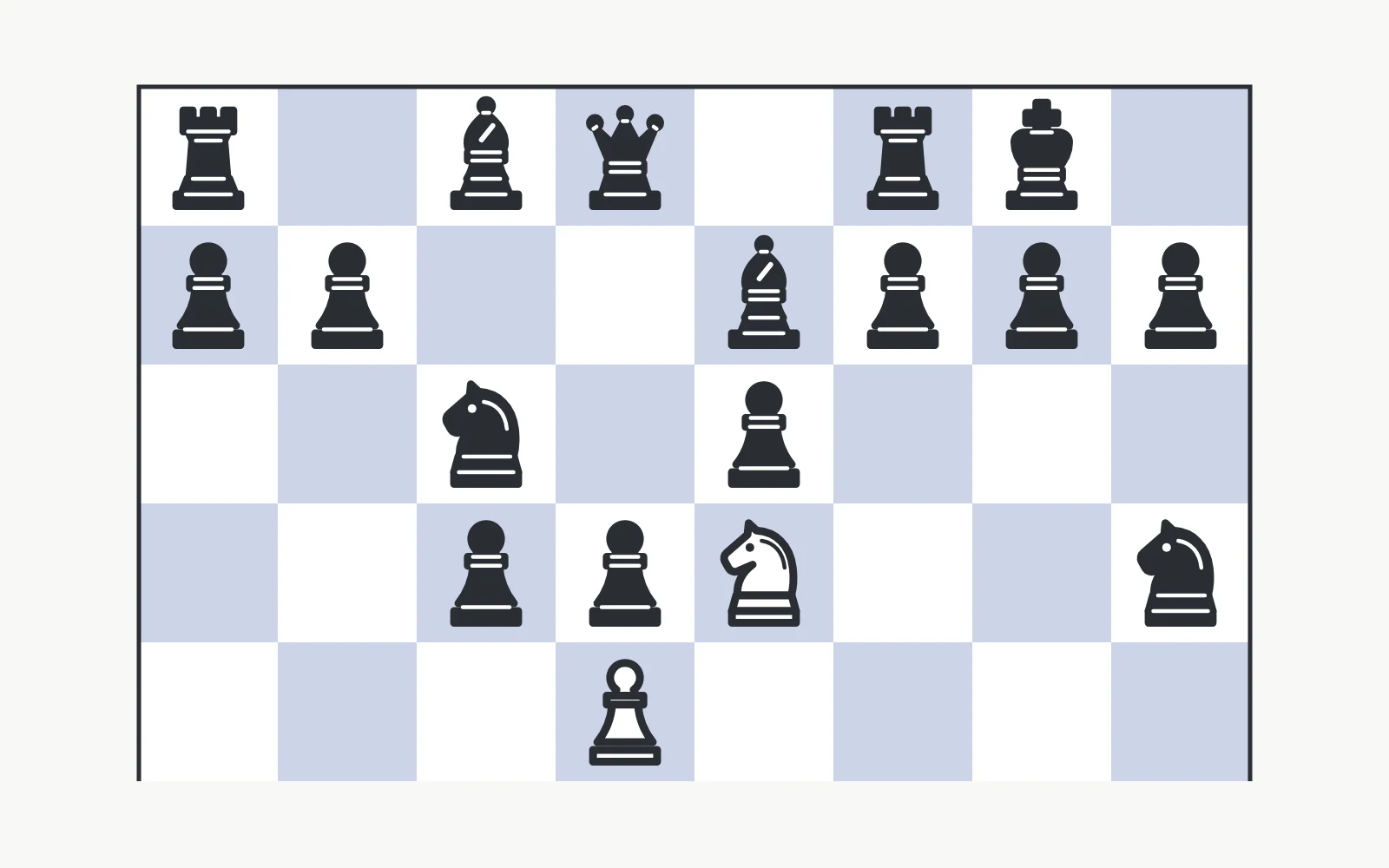
The short version
- Black pieces show their parts: the king's cross, the queen's crown, the rook's battlements, the pawn's collar
- White's pieces get the same lines, so a pair reads as a pair
- Easier at phone size, on light squares, dark squares and the yellow last move
- Puzzles, the opening shelf's covers and the trainer's paper board, the guides and the pictures you share
Our black pieces were solid shadows. That looks smart on a big screen, but at phone size a king, a queen, a rook and a pawn were four dark lumps of slightly different heights, and you had to squint to tell which lump was about to be forked.
So each piece now shows how it’s put together: thin pale lines where the king’s cross meets the crown, round the queen’s coronet, under the rook’s battlements and the pawn’s head. The battlements open up properly now, and the knight got a mane while we were at it. White’s pieces carry the same lines in ink, and the outlines are a shade bolder on both sides. Same pieces, same board; you just see more of them.
You’ll see them on puzzles, on the covers along the opening shelf (and the trainer’s paper board), in the diagrams in the guides, and in the picture that goes with a puzzle when you share it. Find the move. It’s easier to find when you can see the pieces.